
01 — About
Background

My background in Sociology instilled a deep curiosity for uncovering trends and insights through both qualitative and quantitative data, and a drive to turn those findings into stories that matter. I'm now pursuing my M.S. in Marketing, sharpening my technical toolkit and learning to translate data and insights into clear, actionable strategy.
I am deeply passionate about data analytics, visualization, and strategic research for the human insight they uncover. My goal is to create impactful marketing initiatives that genuinely connect with customers, optimize brand engagement, and drive measurable value for growing companies.
- ProgramM.S. Marketing Analytics
- SchoolMcCombs, UT Austin
- Undergraduate degreeSociology
Toolkit
02 — Experience
Experience
-
 September 2025 – May 2026
Undergraduate Research Assistant
McCombs Behavioral Science Laboratory
Austin, TX
Details
- Collaborated with doctoral students to simplify over 10 behavioral study protocols and experimental designs, leading to improvements in research execution efficiency in lab
- Developed comprehensive operational guidebooks for lab studies bi-weekly, ensuring consistency and improving data quality across multiple research projects
-
 May 2025 – August 2025
Data and Analytics Intern
Arc of The Capital Area
Austin, TX
Details
- Utilized Excel Pivot Tables to analyze survey data to better communicate The Arc's efficiency, enabling the organization to secure or retain key grant donor funding
- Designed and implemented a new metric guide for internal organizational reporting and external impact reports, directly strengthening donor trust and securing critical grant funding
- Collaborated with leadership weekly to maintain metrics aligned with each program's goals and activities
-
January 2025 – May 2025
Business and Development Intern
Arc of The Capital Area
Austin, TX
Details
- Proposed qualitative and quantitative donor research project to inform a revised and segmented donor outreach and stewardship strategy to boost retention rates
- Designed and deployed strategic segmented email marketing and cold-calling campaigns, directly resulting in over 50 donations for annual gala
- Tracked donor interactions and donations daily in the Bloomerang database to ensure 100% data accuracy, high-quality donor relationships, and retention
03 — Projects
My Projects
The Toast Restaurant Manager Journey
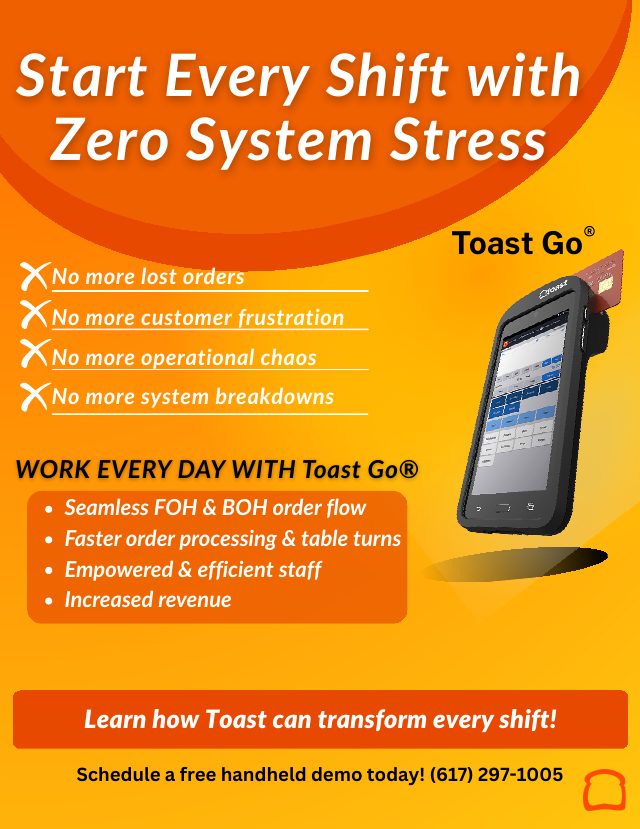
Interviewed five restaurant general managers to map their end-to-end decision journey adopting a POS platform, then translated the findings into a persona, customer journey map, and messaging strategy tied to channels and metrics.
View case study ▾
Case Study · Market Research & Customer Journey Mapping
01 · Overview & Approach
Understanding the decision behind the purchase
Restaurant managers rarely explain a POS switch as a single decision: it's a string of small frustrations, comparisons, and a moment of relief. This project set out to map that string end to end.
Objective. Understand the end-to-end decision journey of restaurant general managers evaluating and adopting Toast, a restaurant point-of-sale (POS) platform, including their pain points, decision criteria, and what keeps them loyal after purchase.
Method. I conducted five semi-structured interviews with general managers at full-service restaurants currently using Toast, asking each to walk through how they first recognized a problem with their old system, how they evaluated alternatives, and how their relationship with Toast has evolved since adopting it.
Target segment. US full-service, sit-down restaurants, a segment where order accuracy, table turn speed, and front-of-house/back-of-house coordination directly affect revenue and staff workload.
5 general managers, current Toast customers, full-service restaurants
Persona · 5-stage customer journey map · B2B sales toolkit: messaging grid with six hooks, channels, and metrics · One-page marketing slick · Warm and cold email lead templates
The persona and journey stages are my synthesis of recurring themes and language across the five interviews, not a transcript of any single conversation. Quotes are drawn directly from interviewees.
02 · Persona
A composite of the five general managers interviewed for this project: an experienced service-industry professional who has worked in restaurants for 15+ years, expertly running both front-of-house and back-of-house operations. Driven by seamless efficiency, and wary of restaurant technology that complicates rather than simplifies the job.
| Age range | 35–50 |
| Title | General Manager |
| Education | High school diploma |
| Reports to | Restaurant owner |
| Role in buying process | Key influencer on the owner's decision; primary decision-maker for day-to-day technology |
| Preferred communication | Phone calls |
Source: thematic synthesis of five semi-structured interviews with Toast general managers at full-service restaurants.
02 · Persona, continued
Problems to Solve
- Wants to maintain restaurant flow and avoid operational chaos during busy shifts.
- Needs to minimize operational errors that lead to comped meals and financial losses.
- Lacks a user-friendly POS system.
- Wants automated operations (payroll, tip calculation, sales analysis) to free up time for other tasks.
Decision Making & Communication
- Always busy; does not have time for frequent meetings.
- Looks to other colleagues in the restaurant industry for product referrals.
- Prefers quick communication, over the phone.
Fears, Challenges & Objections
- Works long hours with tedious paperwork and taxing responsibilities.
- Struggles to streamline communication between the owner and employees.
- Struggles to maintain good customer reviews due to consistent system issues.
Where Toast Fits
Toast offers POS technology that encompasses all restaurant operations, letting Sam run a work environment that operates smoothly for her employees and improves customer satisfaction. A user-friendly, customizable interface with swift order-taking and payment processing means she never has to comp another meal or dread the next busy dinner rush.
Source: recurring themes identified across five general-manager interviews.
03 · Customer Journey Map
From "our system isn't working" to "I wouldn't switch"
- Recognizes POS/order inefficiencies
- Colleague referrals
- Researches alternatives (Aloha, Clover)
- Prioritizes ease of use
- Discusses options with the owner
- Demos, handheld tests, online forums
- Seeks an efficient, streamlined POS
- Consults with the owner
- Demos, sales calls, online resources
- Less stressed and overworked
- Customer satisfaction improves
- Frustrated with support response
- Support tickets and calls
- Stays because it's easier and works
- Some maintenance concerns remain
- Recommends Toast to peers
- Online reviews, long-term rep relationship
What Sam needs
Strategic implications
04 · Messaging Strategy
Turning each insight into a measured message
Each row starts from a theme in the interviews, translates it into a message aimed at Sam, and pairs it with the channel and metric that would tell us if it worked.
| Hook | Customer Insight | Message | Channel | Success Metric |
|---|---|---|---|---|
| Have | Toast frees up managers' time by automating tip calculation, sales analysis, and payroll integration. | "Enjoy more free time with Toast's ability to automate tip calculation and sales analysis while integrating payroll, so you don't have to." | Google Ads | Click-through rate |
| Average Day | Toast reduces stress during every shift by removing system chaos and streamlining communication. | "Enter every shift knowing no ticket will be lost: Toast's handhelds simplify every task you need, every time." | Sales collateral | Demos scheduled |
| Speed & Automation | Toast automates key restaurant functions: FOH/BOH communication, tip calculation, sales analysis. | "Toast automates front-of-house and back-of-house operations, giving your team the efficiency to focus time and effort elsewhere." | Sales collateral | Demos scheduled |
| Proof & Results | Toast customers report meaningful gains in revenue and ticket speed. | "Stop losing money to small mistakes: Toast customers grow revenue by 30% on average, with a 20% reduction in ticket times." | YouTube testimonial | Click-through rate |
| Feel | Toast Go handhelds retain payment and order data, easing the fear of lost revenue. | "End the anxiety of lost orders and failed payments with fully integrated connectivity that protects every payment and builds customer confidence." | Email outreach | Response rate |
| Status | Fewer technical issues and lost tickets translate into stronger customer reviews. | "Grow your reviews with a reliable, streamlined POS that puts technical issues behind you and makes every customer feel like a priority." | Facebook ads | Demo request rate |
05 · Sales Toolkit
Putting the messaging to work
The insights and messaging grid became a B2B sales toolkit: a one-page marketing slick and warm and cold lead email templates.
Warm Lead Email
Subject: Follow-Up: End the Stress of Lost Tickets and Payments
Hi [Contact's First Name],
[Paragraph about the individual]
The last time we spoke, you mentioned how much you prioritize keeping a smooth-running restaurant and avoiding those small mistakes that lead to lost tickets and comped meals.
I'm following up because our Toast Go handhelds can eliminate that financial stress, so you never have to worry about a lost order or payment again. Our integrated wireless access point ensures that this data is kept, even when service is lost, so that you can have complete confidence in your sales at the end of the shift and can focus on keeping your customers happy.
Would you be available to talk for a 10-minute call sometime this week? I would love to show you how Toast can make this possible.
How does next Monday (11/17) at 3 pm work for your schedule? If this doesn't work for you, I'm happy to set up another time to chat.
Best,
[salesperson's name]
[salesperson's title]
[salesperson's email]
[salesperson's number]
Cold Lead Email
Subject: End the Financial Stress of Losing Orders and Payments with Toast
Hi [Contact's First Name],
[Paragraph about the individual]
For a busy General Manager, like you, tackling operational chaos, lost orders, and missing payments during the busy rush can be costing to the time and energy you devote to your establishment. But you're not alone.
Toast Go offers an integrated wireless access point, perfect for patios and large restaurants that maximize your internet capabilities. Our handhelds are designed so that you can finally eliminate the anxiety of those unnecessary comped meals and stressful end-of-shift scenarios where you can't find a payment.
When's the last time your restaurant lost an order or payment?
I would love to show you how Toast can reduce the mid-rush stress and make your job easier.
Are you available for a 10-minute call next Monday at 3:30 pm? If this doesn't work for you, I'm happy to set up another time to chat.
Best,
[salesperson's name]
[salesperson's title]
[salesperson's email]
[salesperson's number]
Student Wellness Membership Conjoint Analysis
Team project: surveyed 14 graduate students on 20 membership profiles, estimated part-worth utilities with regression, and ran market share simulations to decide which wellness membership to launch first, and which to add second.
View case study ▾
Case Study · Conjoint Analysis & Market Simulation
01 · Overview & Approach
What would make a graduate student sign up?
Graduate students juggle demanding schedules, tight budgets, and different wellness preferences, which makes traditional gym memberships a hard commitment. We designed a Student Wellness Membership for graduate students in Austin and used conjoint analysis to measure which features actually drive the decision.
Design. We built 20 membership profiles from four attributes using a fractional factorial design, so respondents rated a manageable set while we could still estimate the effect of every attribute. Each profile was rated on a 7-point scale (1 = not appealing, 7 = very appealing) in a Google Forms survey.
Analysis. Regression on each respondent's ratings produced individual part-worth utilities, which fed relative importance, price sensitivity, and market share simulations.
Product Attributes Measured
| Class type | Reformer Pilates · Cycling · Yoga |
| Monthly price | $20 · $40 · $60 |
| Booking window | 48 hours · 1 week · 2 weeks · 4 weeks |
| Classes per month | 4 · 8 · 12 · Unlimited |
- Survey design: respondents rated 20 different membership products on a 7-point scale
- Dummy coding and data preparation for regression in Excel
- Calculated part-worths and relative importance for each respondent
- Calculated market share for new hypothetical products to measure their impact on the market
14 graduate students
20 per respondent, 7-point scale
R² 0.979 for Respondent F: the four attributes explained nearly all variation in their ratings
02 · What Drives Preference
Class type outweighed everything else, including price
Relative importance measures how much each attribute's range of part-worths contributes to a respondent's overall preference. Averaged across all 14 respondents, the type of class offered mattered about twice as much as the monthly price.
View data table
| Attribute | Avg. importance · Most important for |
| Class type | 47.4% · 10 of 14 |
| Monthly price | 22.1% · 3 of 14 |
| Classes per month | 18.1% · 1 of 14 |
| Booking window | 12.4% · 0 of 14 |
Source: calculated from the part-worths of all 14 respondents.
A closer look at one respondent. For Respondent F, class type alone accounted for 63% of preference. Relative to Reformer Pilates, Cycling scored −4.17 and Yoga −4.86, a far larger gap than any price or scheduling change. Their ideal membership was Reformer Pilates at $20 with a one-week booking window and unlimited classes; their least preferred was Yoga at $60, booked four weeks ahead, with four classes.
Class type 63.4% · Price 17.4% · Booking window 14.9% · Classes/month 4.3%
03 · Price Sensitivity
Students prefer cheaper memberships, but demand is inelastic
Individual differences. Price sensitivity plots for five respondents showed most preferred lower prices, but by very different amounts. Respondents B and D lost the most utility as price rose; Respondent A's utility barely moved across $20, $40, and $60.
Elasticity. We tested the leading concept, Product A, at $20 and $60 in the simulated market. Raising the price from $20 to $60 cut the number of respondents choosing it from 10 to 6, a price elasticity of −0.50. Because demand fell proportionally less than price rose, demand in this range is inelastic: even at $60, Product A still captured 43% of the simulated market.
−0.50 $20 → $60, midpoint method
10 → 6 of 14 as price rises from $20 to $60
04 · Market Share Simulation
Which new membership wins the market?
Using every respondent's part-worths, we simulated which membership each student would choose (the option with the highest utility), first for the two existing options, then after introducing each new concept.
- Product X Yoga · $60 · 2-week booking · 4 classes
- Product Y Cycling · $40 · 2-week booking · unlimited
- Product A Reformer Pilates · $20 · 1-week booking · 4 classes
- Product B Yoga · $40 · 1-week booking · 12 classes
View data table
| Scenario | X · Y · A · B |
| Current market | 7.1% · 92.9% · — · — |
| Launch Product A | 0% · 28.6% · 71.4% · — |
| Add Product B | 0% · 21.4% · 64.3% · 14.3% |
Reading the results. Cycling (Product Y) held 93% of the market before any new option launched. Of the three new concepts tested, Product A, Reformer Pilates at $20, captured the largest share, 71%, and pushed Product X out entirely. Adding Product B as a second offering brought the combined share of the two new memberships to 79%.
05 · Recommendation
Lead with the right class at the right price
Launch first
Product A · Reformer Pilates, $20/month, 1-week booking window, 4 classes/month
71% simulated share; inelastic demand (−0.50) leaves room to test higher prices
Add second
Product B · Yoga, $40/month, 1-week booking window, 12 classes/month
Together with A, 79% of the simulated market; widens appeal beyond Pilates
For the business. Because class type drives preference far more than any other feature, investing in the right class offerings will move demand more than adding extra classes or loosening booking rules.
06 · Limitations
The sample was 14 graduate students recruited by convenience in Austin, so results may not generalize to undergraduates or other markets. Ratings were hypothetical rather than real purchases, and the study covered four attributes; factors like location, instructor quality, class length, or perks could also shape demand.
Lucchese: Heritage Starts at Home
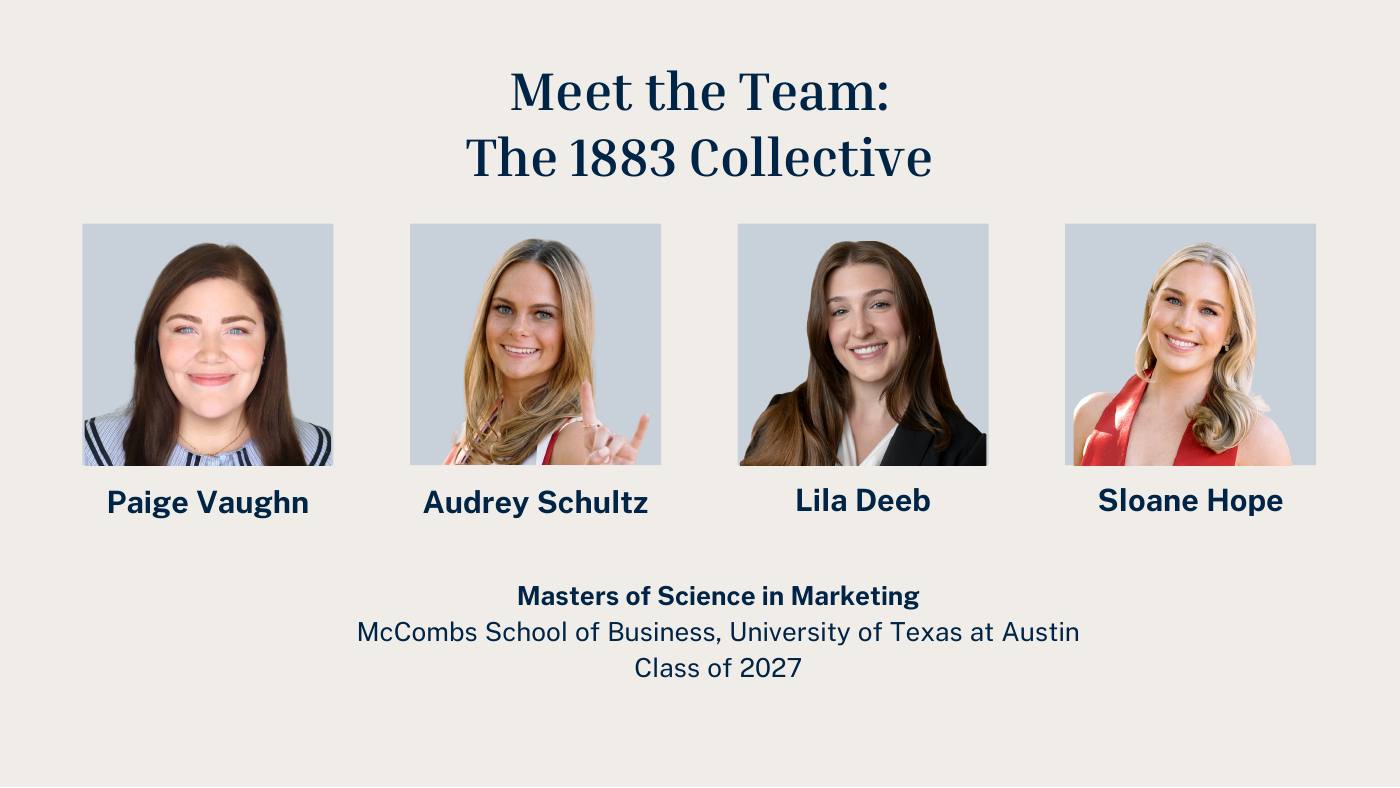
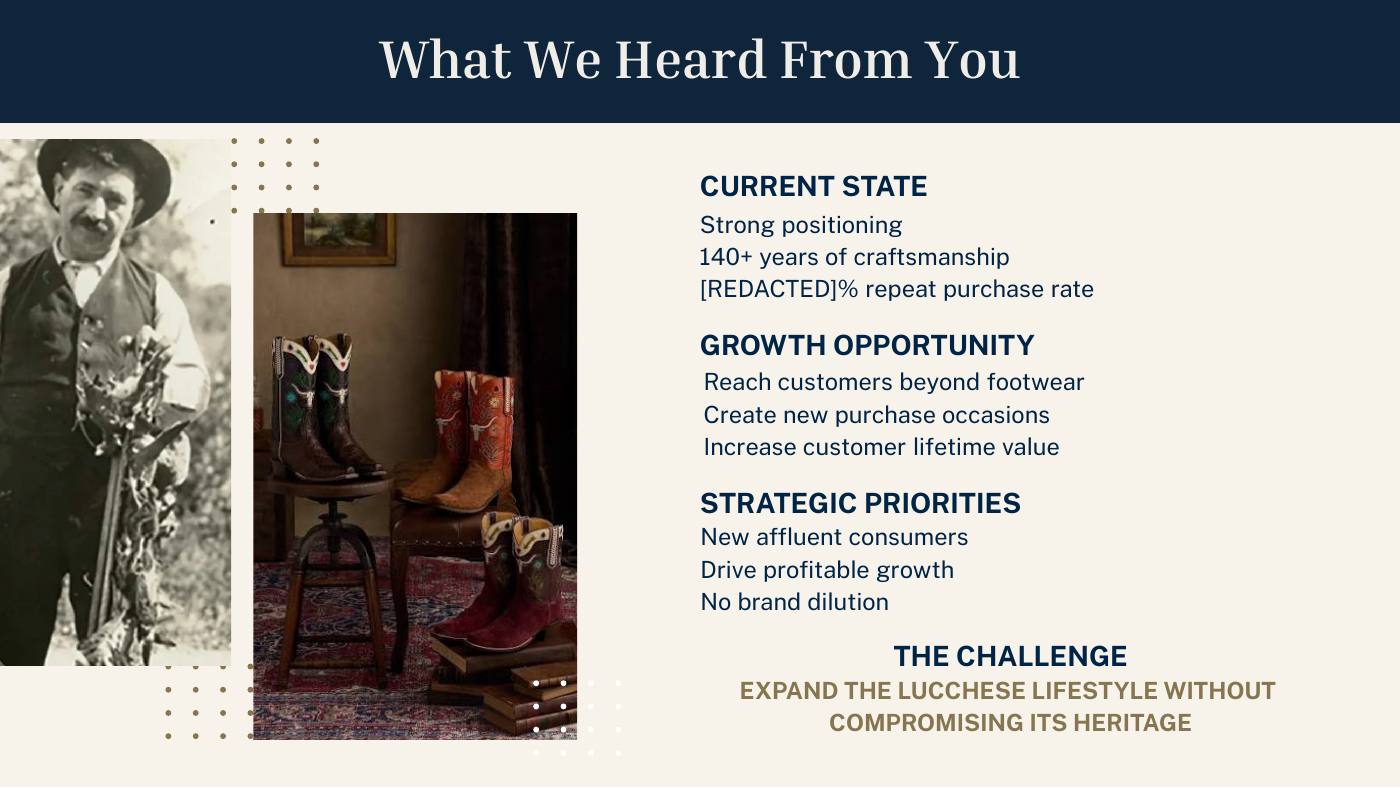
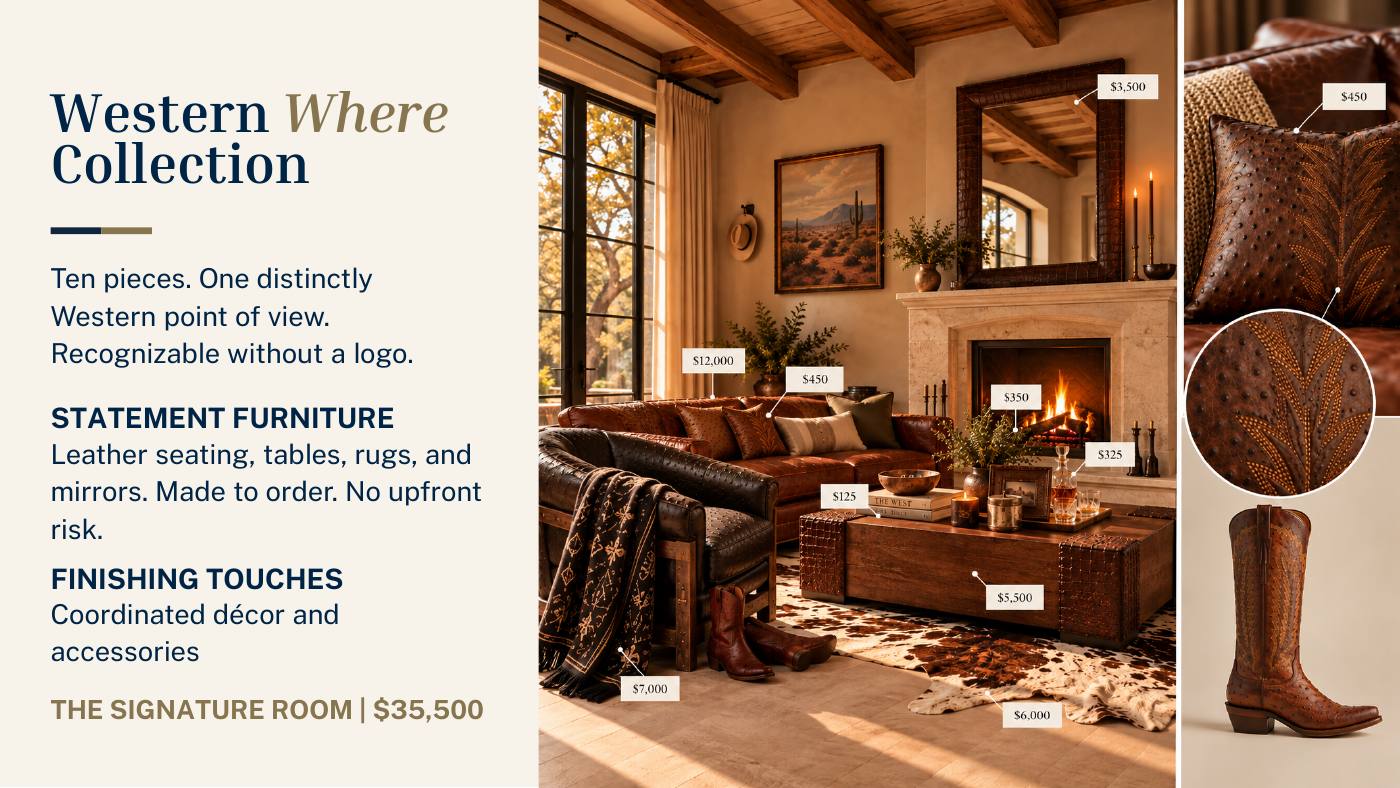
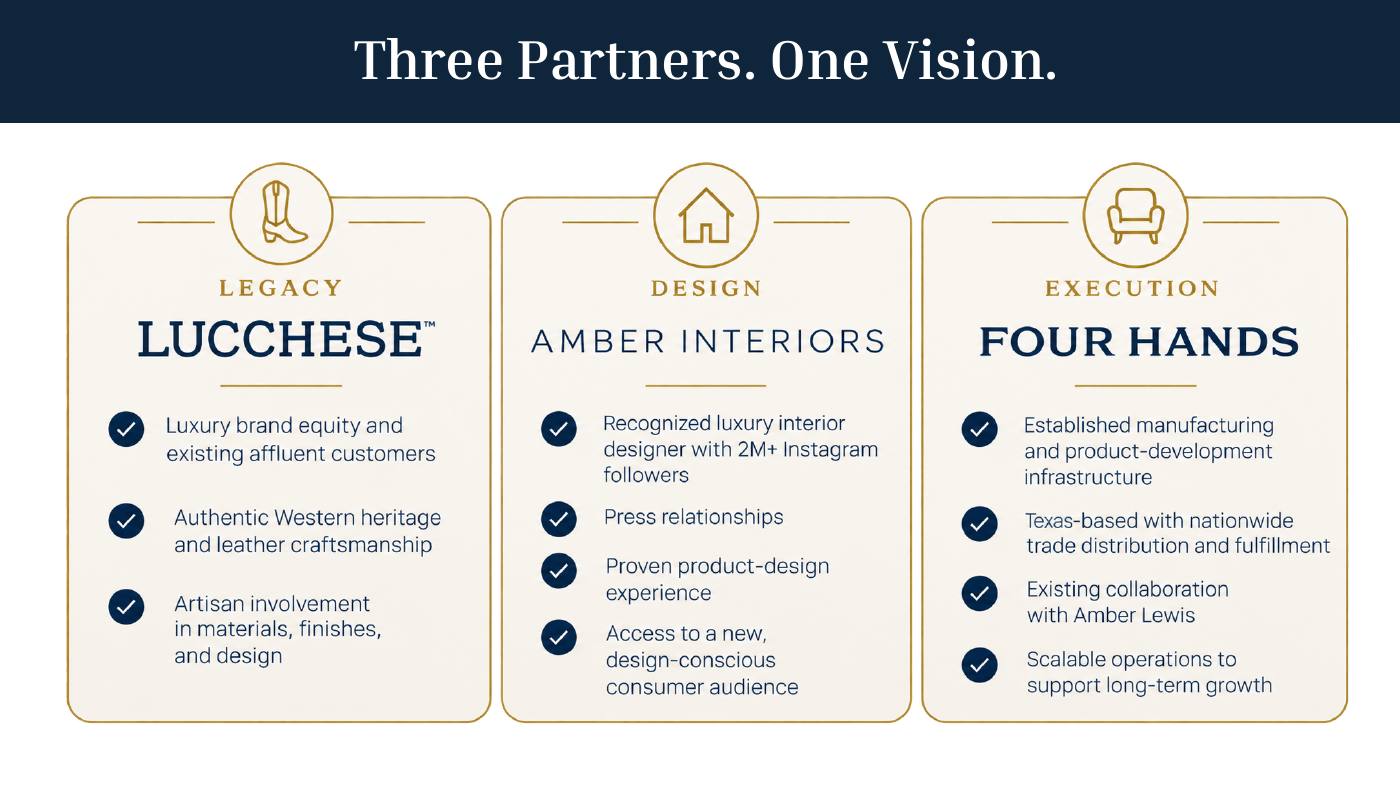
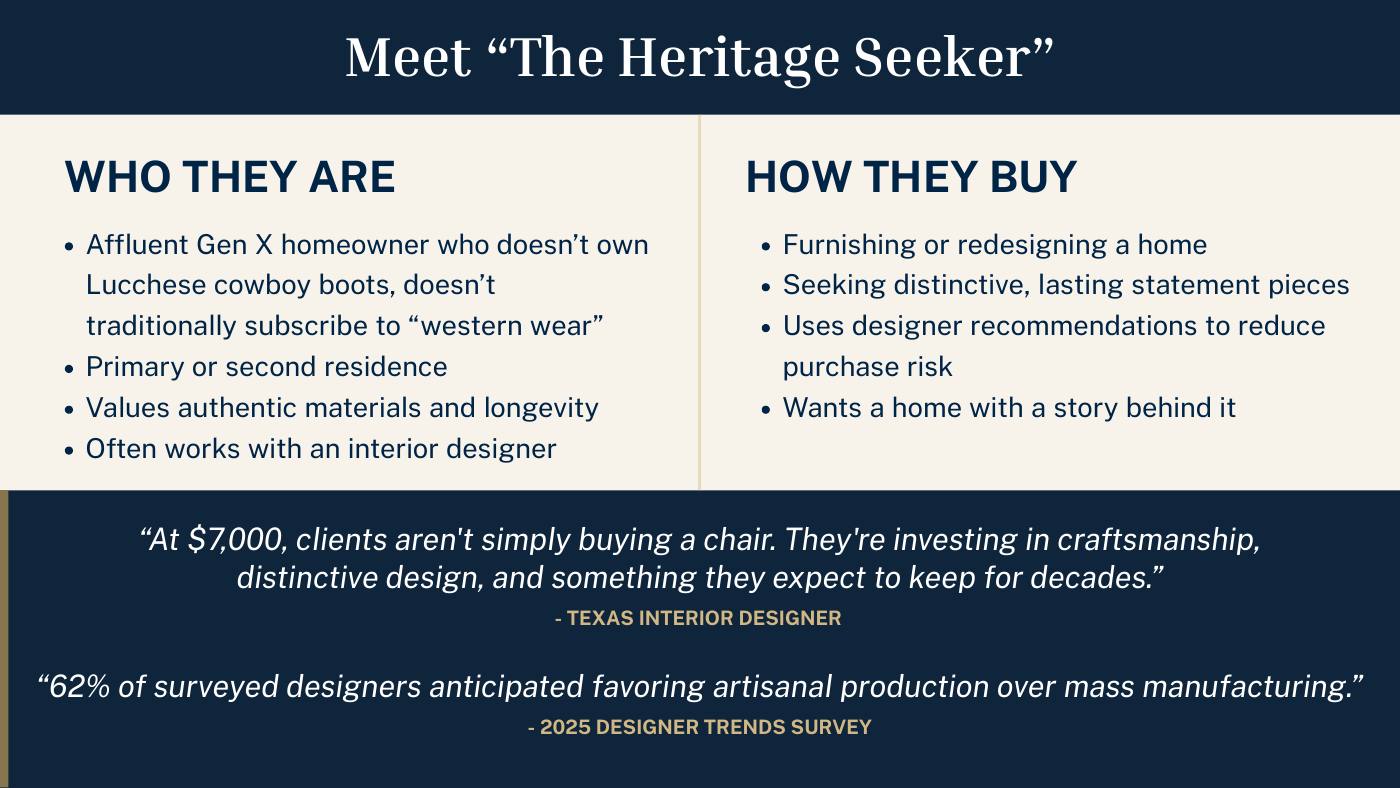
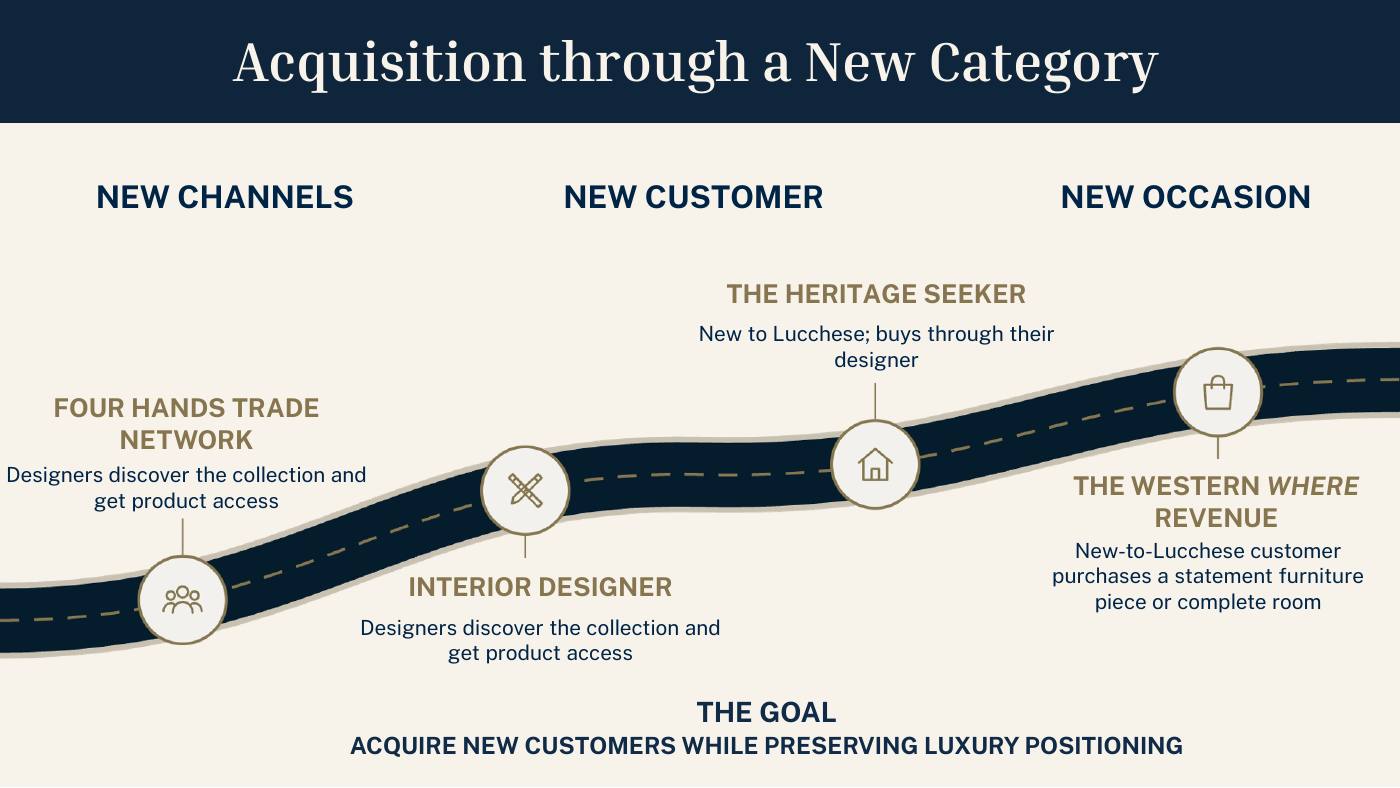
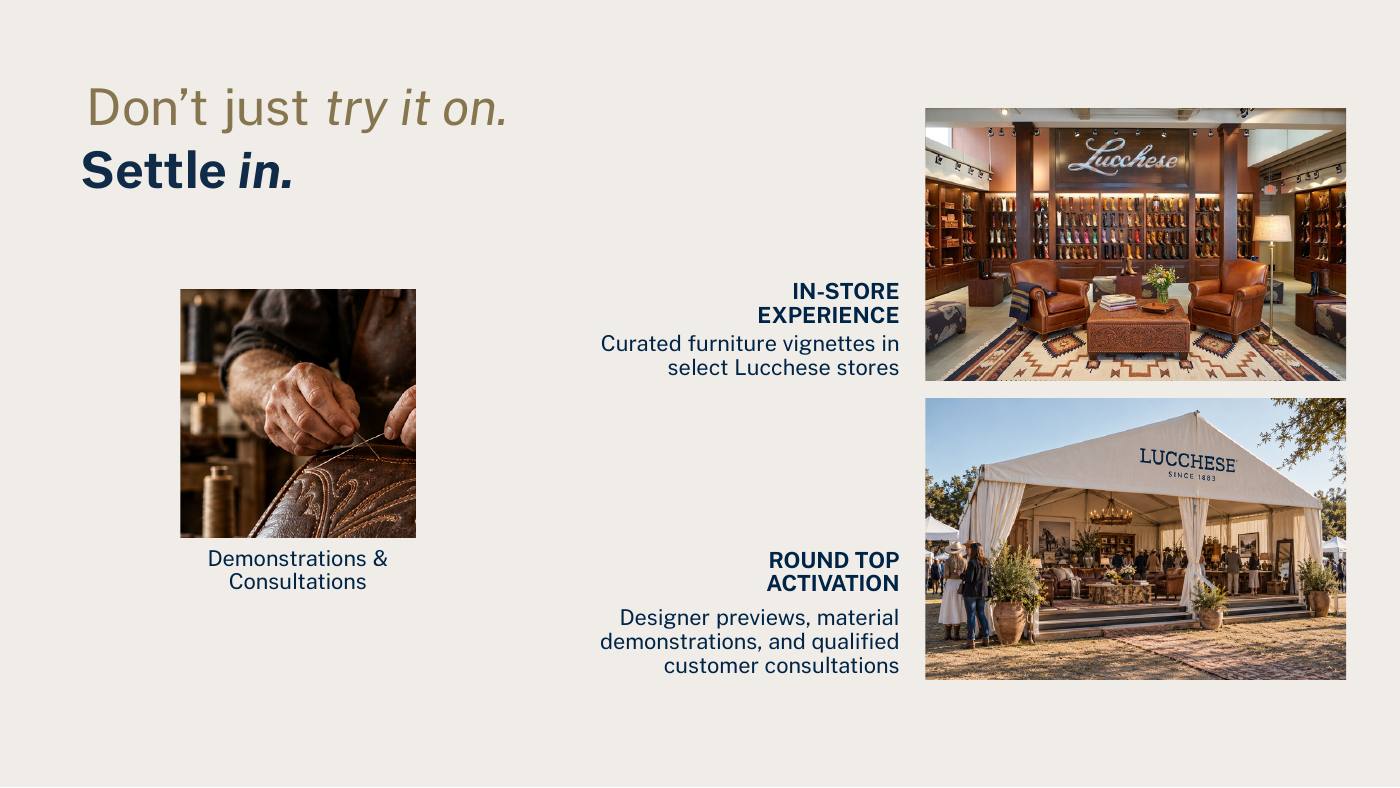
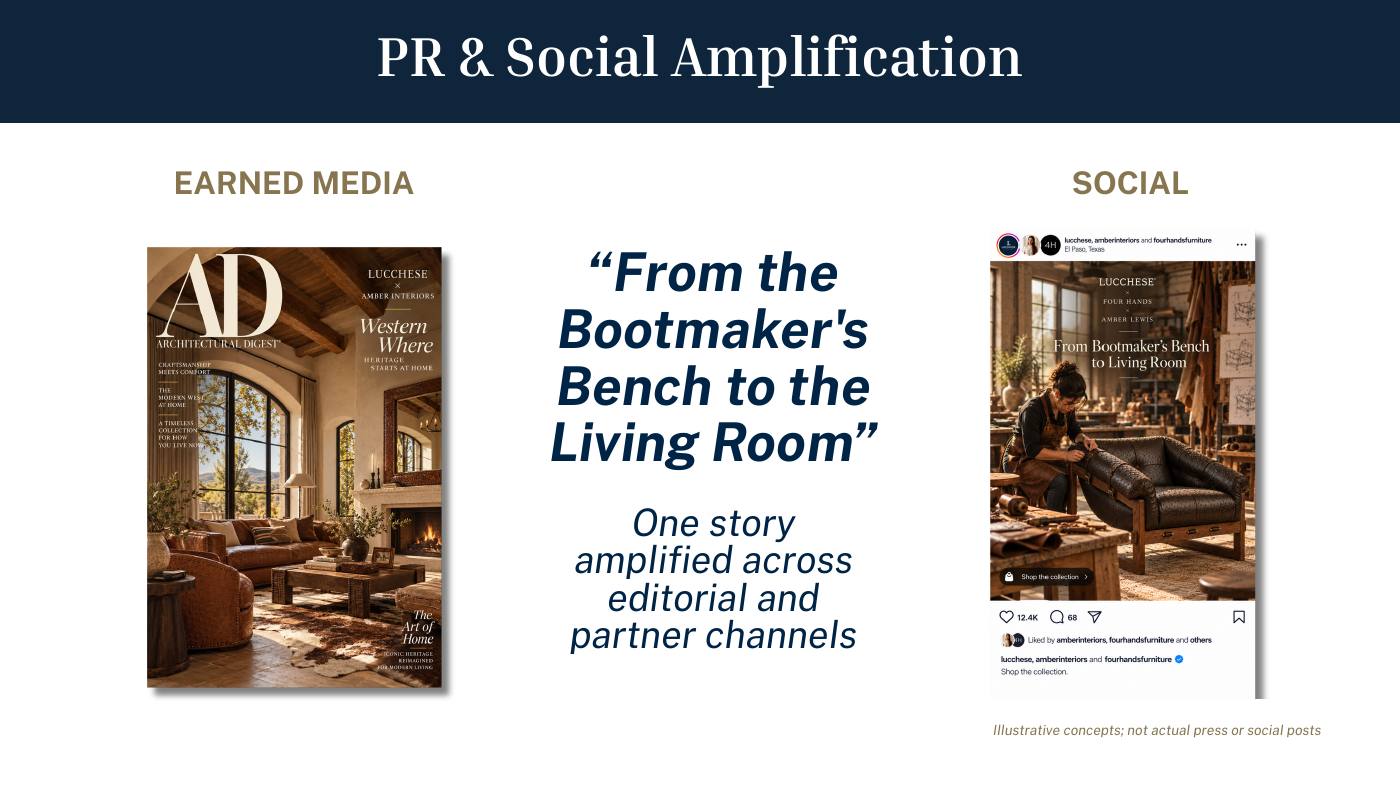
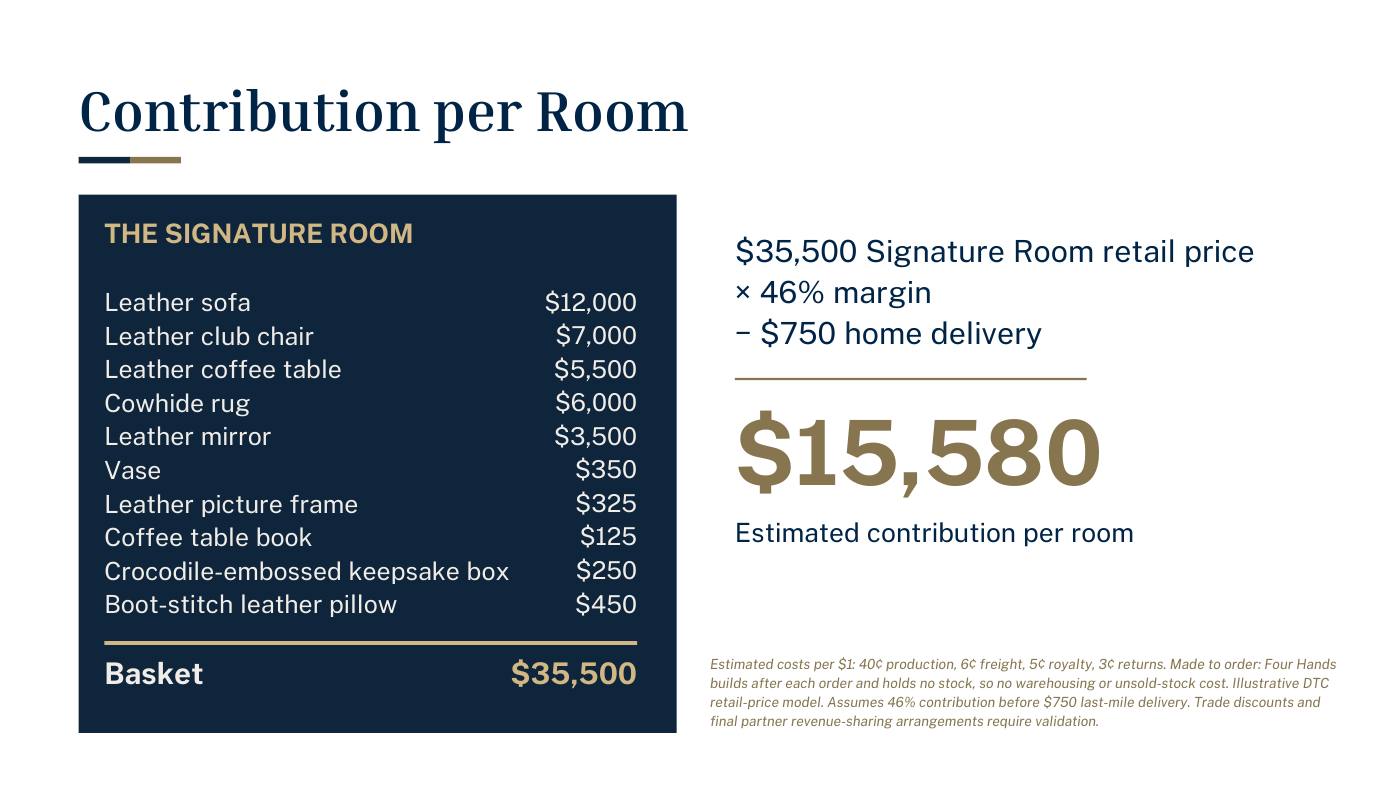
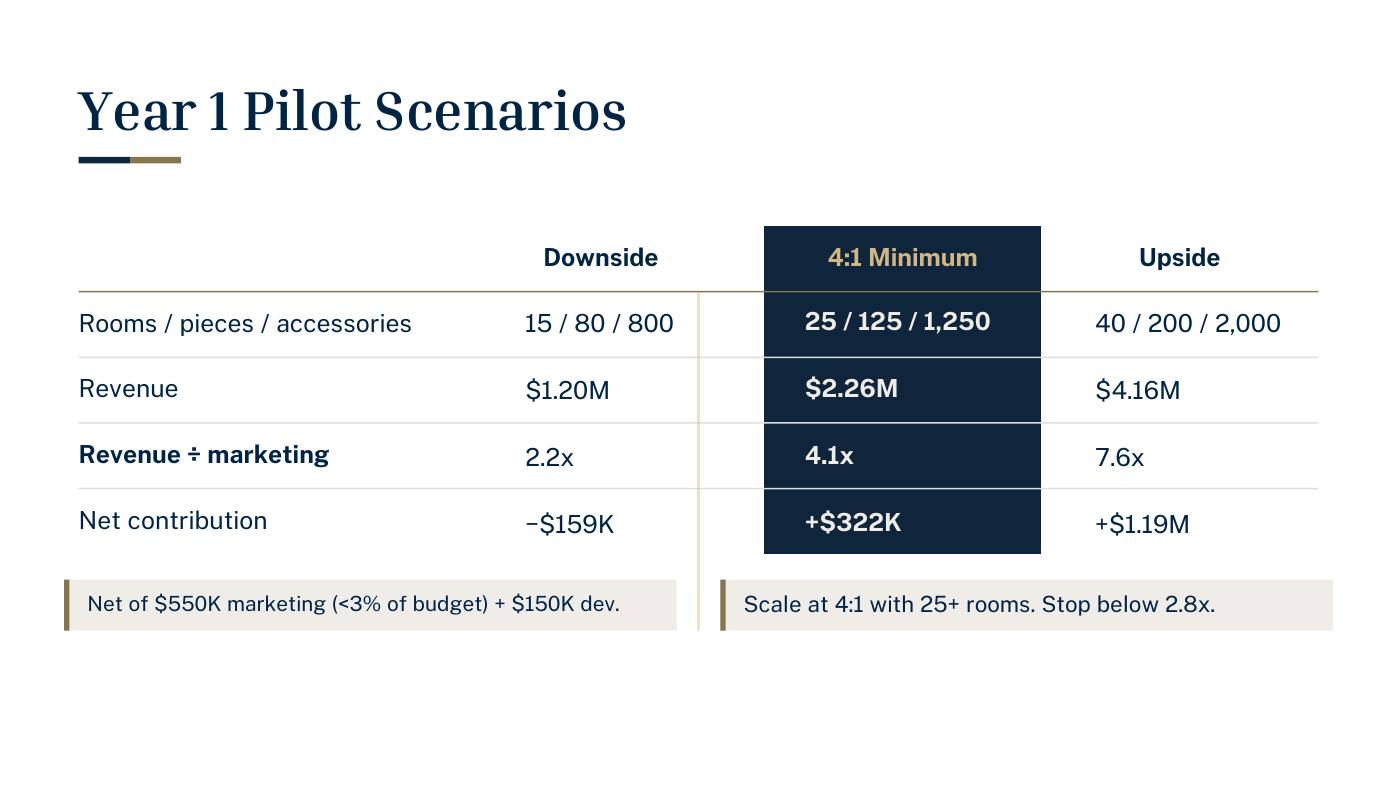
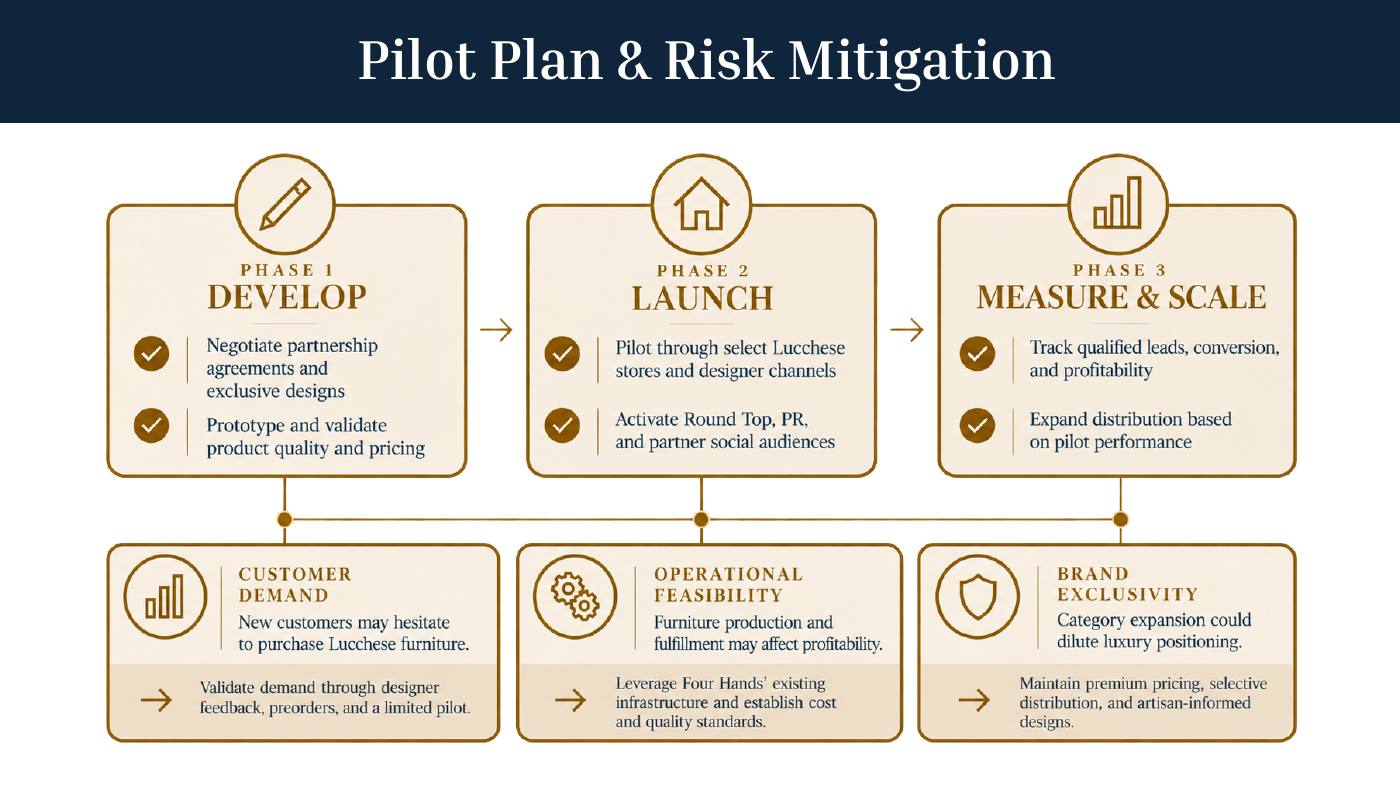
Group project for the CCIMS McCombs Case Competition, where our team placed second: a growth strategy for Lucchese Bootmaker that extends 140+ years of leather craftsmanship into a luxury Western home collection to reach new, affluent customers without diluting the brand.
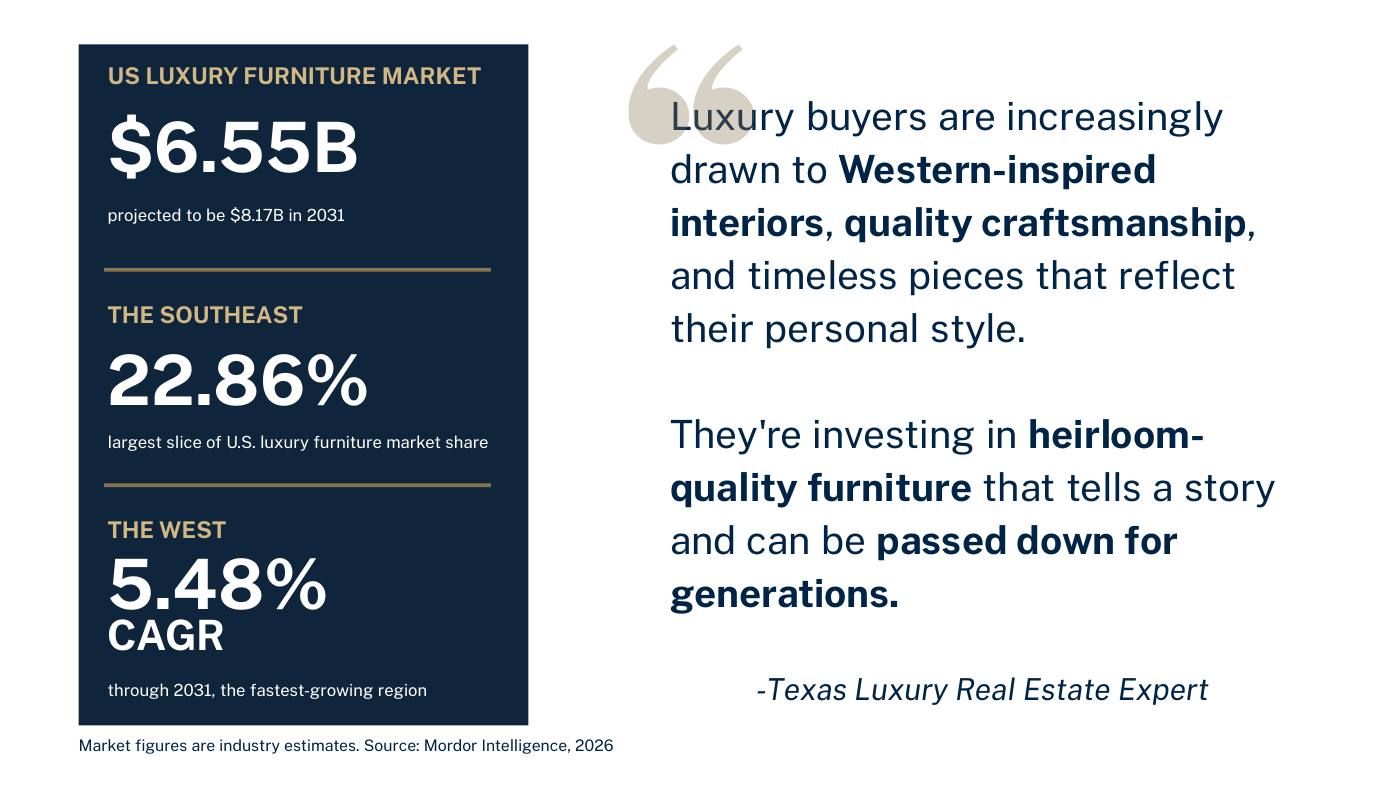
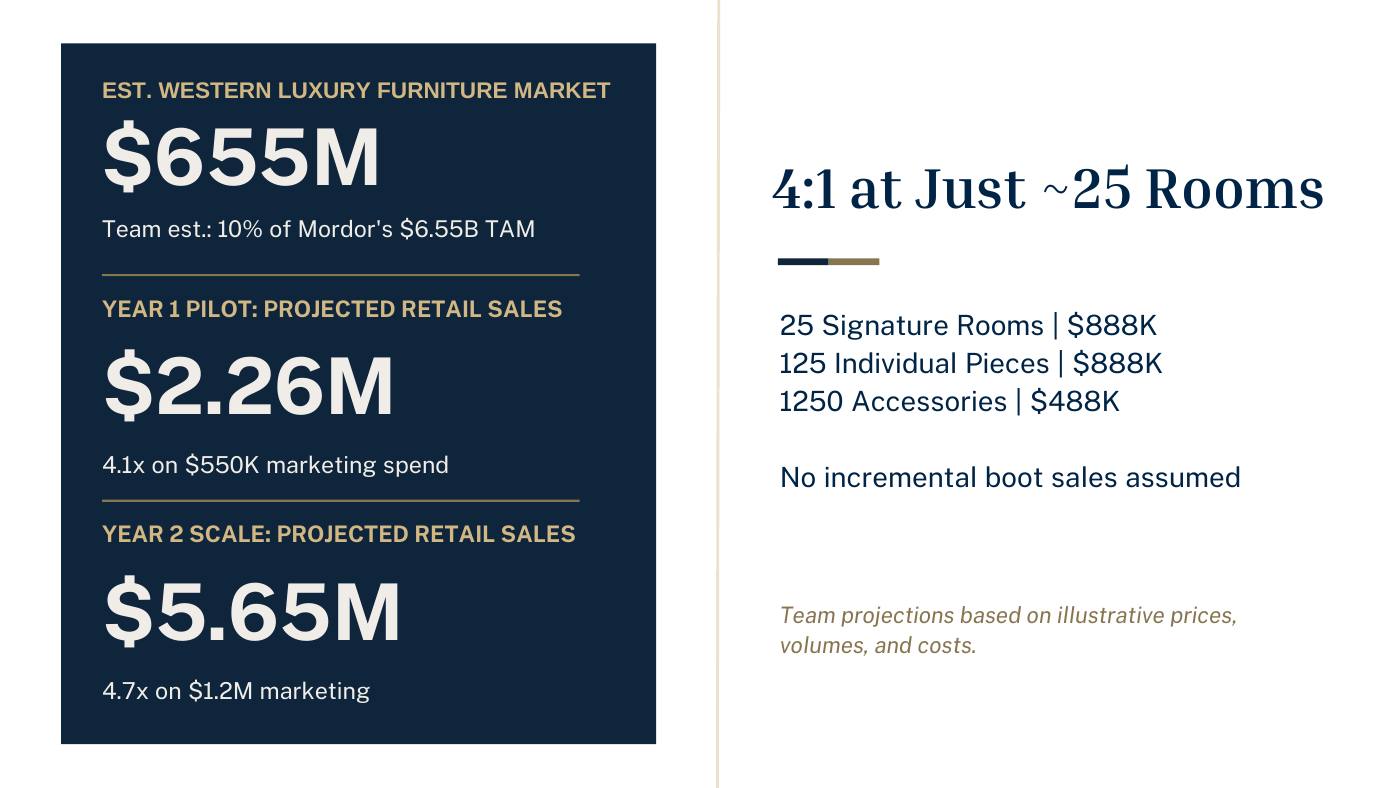
- Sized the opportunity with a TAM/SAM/SOM framework, narrowing a $6.55B U.S. luxury furniture market to a $655M Western luxury segment.
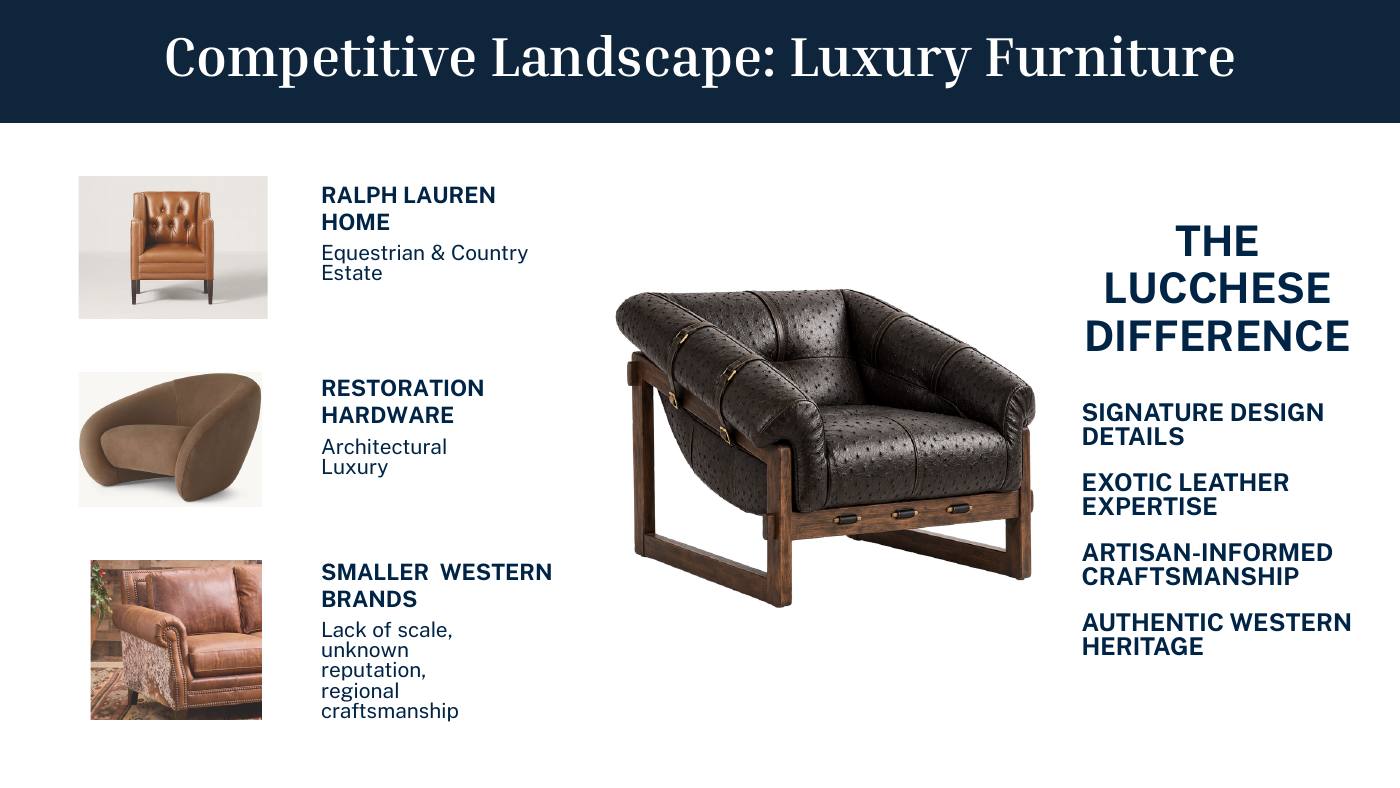
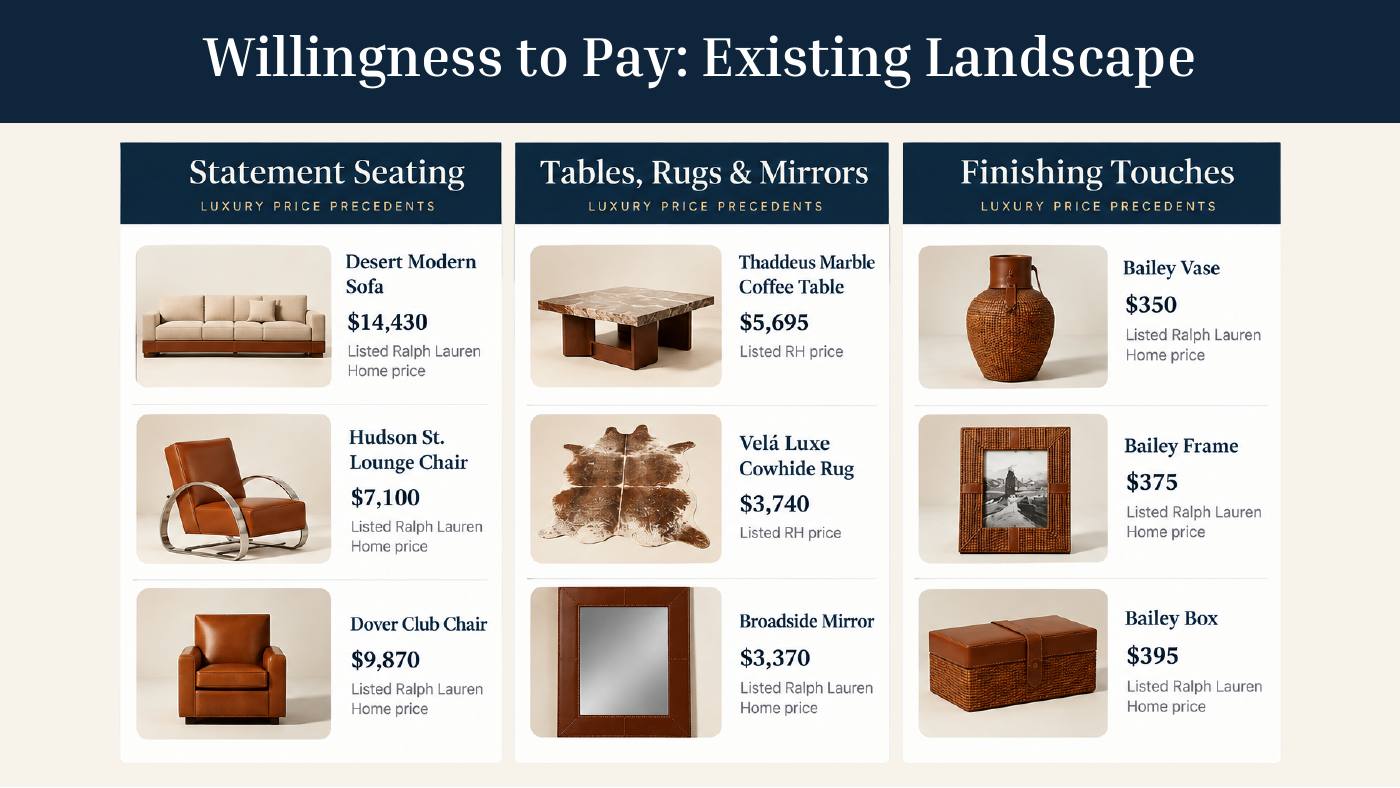
- Led primary and secondary research on willingness to pay and the competitive landscape, which informed our pricing recommendations and positioning against luxury furniture competitors.
View case study ▾



Spotify Curation App
I created my own immersive record store experience to curate my own Spotify playlists.
View on GitHub[Project title]
[One to two sentences: the question you investigated, your approach, and the outcome or business impact.]
View project → (add link)[Project title]
[One to two sentences: the question you investigated, your approach, and the outcome or business impact.]
View project → (add link)04 — Beyond the Work
Outside of Work
I'm a born and raised Austinite who ironically hates the heat. In my free time, I love trying new food and watching new movies, and my favorite artist of all time is Marvin Gaye! Fun fact: I am a bartender and have worked in the service industry for over 8 years :)